
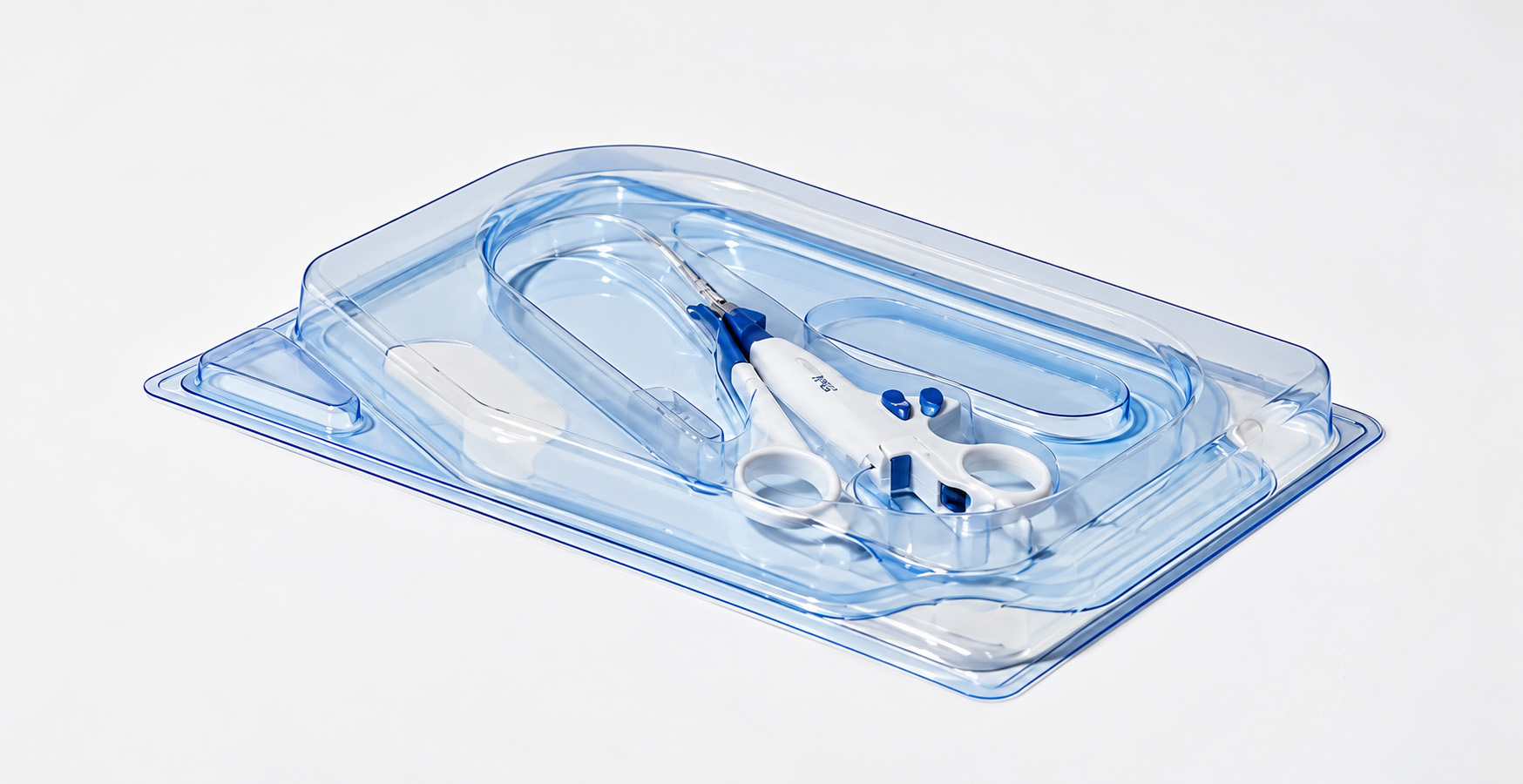
Packaging has historically been treated as the last step in a device program, the part that happens once the real work of designing and manufacturing a device is complete. That framing made sense when packaging was primarily a protective function: wrap the finished device so it survives shipping and stays sterile until use. It is a narrower role than the packaging partner relationship is capable of today.
From Protective Function to Development Input
A tray is not just a container. It shapes how a device is presented in a sterile field, how intuitively a clinician can access it, and how efficiently it can be manufactured and sealed at scale. Those are development questions, not just protective ones, and they are easier to answer well when the packaging partner is involved while a device is still being designed rather than after. That shift is changing what device companies expect from a packaging relationship. Instead of a vendor who receives a finished device and builds something around it, more companies want a partner who can weigh in on design decisions that affect how a device will eventually be packaged and shipped.
What That Looks Like as a Thermoformed Packaging Manufacturer
As a thermoformed packaging manufacturer working inside the combined Averra + ZIEN platform, Averra's role increasingly starts earlier in a device's development rather than at the end of it. That means design input during a device's early iterations, not just tray engineering once a geometry is locked. It also means tools like Bridge Tooling, which can deliver production-equivalent parts for design verification before a customer commits to full production tooling, so packaging decisions can be tested against a device that is still evolving.
Why This Shift Benefits Device Companies
A packaging partner involved earlier can catch issues that are expensive to fix late, a geometry that is difficult to seal reliably, a retention feature that adds unnecessary cost, a tray design that will need significant rework if the device changes. Catching those issues during development rather than after manufacturing is finished is where the value of an earlier, more involved packaging partner becomes clear.The role of a packaging partner is shifting from a step at the end of a program to a voice throughout it. Device companies that treat it that way tend to end up with a better finished product.
Interested in involving a packaging partner earlier in your next device program? Connect with our team.