
Materials, Lidding Options, Costs & Compliance Considerations
Sterile packaging is a critical component of medical device performance, regulatory compliance, and patient safety. A well-designed sterile barrier system does more than protect a product—it preserves sterility through distribution, handling, and storage while supporting efficient clinical presentation.
For manufacturers developing thermoformed medical procedure trays or complete sterile barrier systems, success depends on material selection, seal integrity, validation strategy, and cost control.
At Averra Packaging, we help OEMs design validated medical device packaging solutions that balance protection, usability, and economics.
Why Sterile Packaging Matters
Sterile packaging must maintain sterility until the point of use. Any breach in seal integrity or material failure can result in contamination, product recalls, or regulatory action.
Effective sterile medical tray packaging must:
- Provide a validated sterile barrier system
- Resist puncture and seal channeling
- Withstand distribution stresses
- Maintain seal strength over shelf life
- Support aseptic presentation in clinical environments
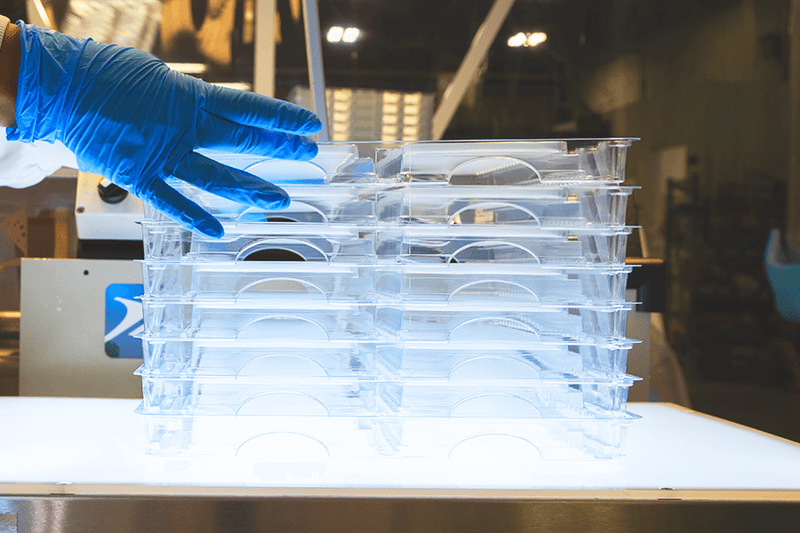
Custom thermoformed trays are particularly effective for stabilizing complex devices, minimizing movement, and protecting critical components during transit.
Sterile Packaging Requirements and Regulatory Standards
Sterile packaging systems are governed by established international standards and U.S. regulations.
Key requirements include:
- International Organization for Standardization (ISO) 11607-1 & 11607-2 – Requirements for materials, sterile barrier systems, and packaging process validation
- U.S. Food and Drug Administration (FDA) Quality System Regulation (21 CFR Part 820)
- ASTM test methods for seal strength, burst, creep, dye penetration, and microbial barrier testing
Compliance requires:
- IQ/OQ/PQ validation of sealing processes
- Seal strength and integrity testing
- Accelerated and real-time aging studies
- Distribution simulation testing (ISTA protocols)
- Documented change control
A robust sterile packaging system must demonstrate repeatability, process control, and material compatibility within a validated manufacturing environment.
Thermoformed Medical Procedure Trays: Why They’re Preferred
Thermoformed trays are widely used in sterile medical packaging because they offer:
Advantages
- Custom cavity design for device protection
- Excellent dimensional stability
- Consistent sealing flanges
- Scalable production
Common Materials
- PETG
- HIPS
- PVC
- HDPE
- Polypropylene
Proper flange design and material thickness are critical for achieving consistent seal performance with lidding materials.
Lidding Materials for Sterile Packaging: Pros, Cons & Cost Ranges
Selecting the correct lidding material directly impacts performance, peelability, cost, and regulatory compliance.
Below are common options used in sterile medical device packaging:
1. Medical-Grade Tyvek®
Pros
- Excellent microbial barrier
- Strong yet peelable
- Highly resistant to puncture
- Widely accepted in regulatory submissions
Cons
- Higher material cost
- Opaque (limited product visibility)
- Requires careful sealing parameter control
Best For: High-value medical devices requiring strong barrier performance.
2. Coated Medical Paper
Pros
- Lower material cost
- Good peel characteristics
- Printable surface
Cons
- Lower puncture resistance than Tyvek®
- Fiber tear risk if seal parameters are not optimized
- Reduced durability in humid environments
Best For: Cost-sensitive applications with moderate barrier requirements.
3. Foil Laminates
Pros
- Excellent barrier to moisture and oxygen
- Strong seal integrity
- High-end product perception
Cons
- Not breathable
- Less forgiving in seal parameter variation
- Higher cost
- No visibility of contents
Best For: Devices sensitive to moisture or requiring extended shelf life.
4. Film-to-Film Laminates
Pros
- Transparent product visibility
- Customizable peel strength
- Good moisture resistance
Cons
- May have lower microbial barrier performance depending on structure
- Seal consistency highly dependent on process control
Best For: Applications requiring product visibility and moderate barrier performance.
Cost Considerations in Medical Device Packaging
While lidding material is a significant factor, total packaging cost also includes:
- Tray material and thickness
- Tooling amortization
- Sealing equipment
- Validation and testing
- Scrap rates
- Distribution damage risk
Higher upfront material costs (e.g., Tyvek® or foil laminates) can reduce downstream risk and improve regulatory confidence.
Designing a Sterile Packaging System for Performance & Cost Balance
To optimize both performance and economics:
- Conduct material compatibility testing early
- Perform seal optimization studies
- Validate peel strength for clinical usability
- Evaluate total cost of ownership—not just material price
- Incorporate risk assessment (FMEA)
A systems-based design approach ensures your sterile medical packaging meets compliance requirements while controlling long-term costs.
At Averra Packaging, we design custom thermoformed medical procedure trays and validated sterile packaging systems that protect devices and streamline manufacturing.
Contact us today to learn how Averra Packaging takes the headache and frustration out of your packaging project.