
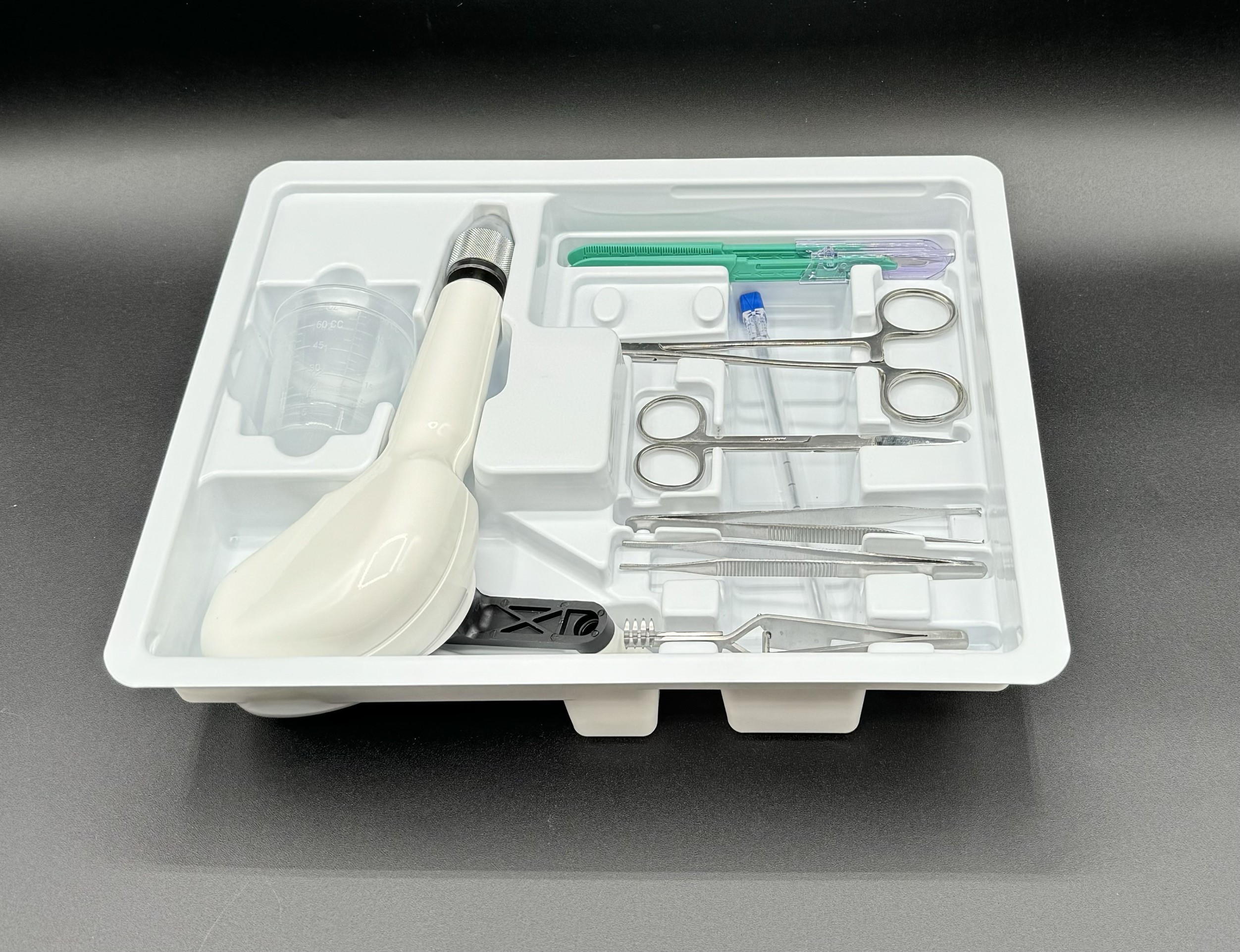
Most medical device teams start their packaging search the same way: get a quote on a custom thermoformed tray, check the lead time, confirm the material is compatible with the sterilization method, and move on. That approach makes sense when packaging is the only thing being sourced. It starts to break down when the tray is just one piece of a much bigger launch, and the rest of that launch is being managed across three or four other vendors who've never spoken to each other.
That's the gap we built the combined Averra + ZIEN platform to close, and it's worth spelling out exactly where that shows up as a real advantage, not just a nicer org chart.
A Market Split Into Two Halves
Look across the medical device supply landscape and you'll generally find two kinds of providers. On one side are packaging specialists: companies that are very good at films, pouches, lidding, and trays, but stop there. On the other side are large-scale device manufacturers built for high-volume OEM programs, where packaging is an afterthought handled by yet another subcontractor.
Neither side is built for the company that needs both and needs them to actually talk to each other. A procedure tray designed in isolation from the device it holds, or a device cleared for market without anyone thinking through how it ships sterile, both create the same problem: rework, delay, and a launch date that keeps slipping.
What the Combined Platform Actually Changes
Since ZIEN Medical joined Averra Holdings, that gap has closed for our customers in a few concrete ways:
A faster, lower-cost path through regulatory. Through ZIEN, we can act as the Manufacturer of Record (the legal entity that regulatory bodies hold accountable for a device), which means our customers don't have to build that infrastructure themselves. In practice, that's translated to roughly 70% lower development costs and 12 to 24 months shaved off typical time-to-market, with customers reaching successful launch at more than double the rate of the average startup going it alone.
A certification stack that already covers the markets you're trying to reach. ISO 13485, EU MDR Class I and Class II, MDSAP, and Japan Foreign Manufacturer Certification are already in place. For a growth-stage device company, that's the difference between a multi-year registration project and a conversation about which markets to launch in first.
A real bridge between prototype and production. On the packaging side, our in-house design and tooling team can turn around true thermoformed prototypes in days, not weeks. For programs that need more than a handful of samples but aren't ready to commit to full production tooling, our Bridge Tooling™ process delivers production-equivalent parts for design verification and ship testing, whether that's a one-off custom thermoformed tray or the lidding and sealing components for a multi-instrument procedure kit.
A footprint built for where the industry is actually headed. We recently doubled our ISO Class 8 cleanroom capacity in Salt Lake City specifically to keep pace with demand, rather than scrambling to add capacity after the fact.
Why This Matters Most for the Companies in the Middle
The companies that feel this gap most acutely aren't the largest medtech OEMs. They have the scale to negotiate dedicated attention from big contract manufacturers. They're the startups and growth-stage device companies trying to get a first product through FDA and EU MDR without a 40-person quality and regulatory department, while also trying to get a medical device tray, a sterile pouch, or a full procedure tray system designed, validated, and ready for the same launch date.
For that company, the question isn't "who makes the best prep tray" or "who handles Manufacturer of Record services" in isolation. It's whether one partner can do both, in sync, without three separate change orders every time the device design shifts. That's the specific advantage of having Averra's packaging engineering and ZIEN's CDMO and regulatory capabilities under one roof.
What This Looks Like in Practice
Say a device team is building a single-use surgical kit. They need a custom thermoformed tray engineered around the instruments, a validated sterile barrier, and, because the device itself is new, a manufacturer of record to carry the regulatory weight while the team focuses on the product. Historically, that's a packaging house, a contract manufacturer, a sterilization vendor, and a regulatory consultant, coordinated by the device company itself.
Today, that can be one conversation. The tray and the device move through development together. The same quality system that supports the procedure tray's sterile barrier validation also supports the device's design history file. And the same team that built the Bridge Tooling™ prototype can tell you, the same week, what that means for your regulatory timeline.
That's the part of this merger that doesn't show up in a press release: not just two companies under one name, but two sets of capabilities that were never built to work together now genuinely doing so.
Have a device or procedure tray program that's been stuck waiting on three different vendors to sync up? Connect with our team to talk through what a single, integrated path to market could look like for you.